

Implementing a CRM system is never the finish line—it’s the starting point. Many enterprises invest heavily in the Siebel CRM system for its robustness, scalability, and ability to handle complex business processes. Yet, despite its power, organizations often struggle to extract real business value from it. The reason is simple, a CRM system that isn’t aligned with business goals becomes a digital filing cabinet instead of a strategic engine.
Aligning Siebel CRM with business objectives ensures the system doesn’t just support operations—it actively drives growth, efficiency, and customer satisfaction. Let’s explore how organizations can bridge the gap between technology and strategy.

Understanding the Role of Siebel CRM in Business Strategy
Siebel CRM is not a generic platform. It’s designed to support large, complex enterprises across industries like telecom, BFSI, utilities, healthcare, and public services. Its strength lies in handling intricate workflows, massive customer data, and multi-channel interactions. But this flexibility also means alignment doesn’t happen automatically.
Before configuring workflows or building integrations, organizations must answer a fundamental question: What business problems should Siebel CRM solve?
Is the goal to:
Without clarity on these objectives, even the most sophisticated Siebel implementation can miss the mark.
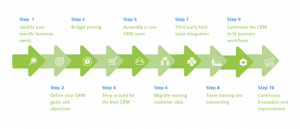
Step 1: Translate Business Goals into CRM Objectives
Business goals are often expressed in broad terms— “increase revenue,” “improve customer retention,” or “enhance service quality.” Siebel CRM, on the other hand, operates through measurable functions like workflows, dashboards, service requests, and analytics. The key is translation.
For example:
When business goals are broken down into CRM-specific outcomes, alignment becomes tangible and actionable.
Step 2: Engage Business Stakeholders Early and Often
One of the most common reasons Siebel CRM projects fail is treating them as purely IT-driven initiatives. Siebel CRM touches sales teams, service agents, operations, compliance teams, and leadership. Aligning it with business goals requires active involvement from business stakeholders, not just sign-off at the end. Workshops, requirement-gathering sessions, and process-mapping exercises help uncover:
When business users feel ownership of the CRM, adoption improves—and alignment follows naturally.
Step 3: Map End-to-End Business Processes in Siebel CRM
Siebel CRM is at its best when it mirrors real business processes instead of forcing teams to work around the system. Process mapping helps organizations:
For example, in a customer service scenario, Siebel CRM should support the entire journey—from issue logging and escalation to resolution and feedback—without breaking context. By aligning Siebel workflows with actual business processes, the system becomes a natural extension of daily operations rather than an obstacle.
Step 4: Balance Configuration and Customization Wisely
One of Siebel CRM’s greatest strengths is its ability to be customized—but this can also become its biggest risk. Over-customization may solve short-term needs but often creates long-term challenges:
To align Siebel CRM with business goals sustainably:
This approach ensures the system remains flexible, scalable, and future-ready while still supporting exceptional business needs.
Step 5: Use Data as a Strategic Asset
Data is at the core of Siebel CRM. But alignment with business goals depends on data quality, relevance, and visibility. Organizations must ensure:
Dashboards and reports should be designed around business KPIs, not just technical metrics. Leadership should be able to answer questions like:
When data insights align with business decisions, Siebel CRM evolves from a system of record into a system of intelligence.

Step 6: Integrate Siebel CRM into the Enterprise Ecosystem
Business goals rarely exist in isolation—and neither should Siebel CRM. To truly align with organizational objectives, Siebel must integrate seamlessly with:
These integrations eliminate data silos and ensure teams have a unified view of customers and operations. The result is faster decision-making, fewer errors, and a smoother customer experience across channels.
Step 7: Measure, Review, and Realign Continuously
Business goals evolve, markets change and customer expectations shift. Aligning Siebel CRM with business goals is not a one-time exercise—it’s an ongoing process.
Organizations should regularly:
Continuous improvement ensures Siebel CRM remains relevant and valuable over time.
The Strategic Value of Alignment
When Siebel CRM is aligned with business goals, the impact is visible across the organization:
Instead of being seen as a legacy system, Siebel CRM becomes a strategic backbone—powering growth, efficiency, and long-term success.

Wrapping Up
Aligning the Siebel CRM system with business goals requires more than technical expertise. It demands collaboration, clarity, and a deep understanding of how technology can truly enable business strategy. Organizations that invest time in aligning people, processes, and platforms unlock the true potential of Siebel CRM—not just as a tool, but as a powerful driver of business transformation. With the right guidance, this alignment becomes both achievable and sustainable. BriskWinIT Solutions, as an experienced Siebel CRM service provider, helps enterprises bridge the gap between strategy and execution, ensuring their CRM investments deliver measurable, long-term business value.
Frequently Asked Questions (FAQs)
Aligning Siebel CRM with business goals ensures the system supports real organizational priorities such as revenue growth, customer retention, operational efficiency, and compliance. Without alignment, Siebel risks becoming a transactional tool rather than a strategic asset that drives measurable business outcomes.
Common challenges include unclear business objectives, limited stakeholder involvement, over-customization, poor data quality, and treating Siebel CRM as an IT-only initiative. These issues often lead to low user adoption and reduced return on investment.
Business stakeholders play a critical role by defining goals, validating processes, and providing real-world insights into daily operations. Their involvement ensures Siebel CRM workflows reflect actual business needs and helps improve user adoption across teams.
Customization should be approached carefully. Wherever possible, organizations should leverage Siebel’s standard configuration options. Customization is recommended only when there are a clear business justification and measurable value, as excessive customization can increase maintenance and upgrade complexity.
High-quality data is essential for meaningful insights and informed decision-making. Inaccurate or inconsistent data can undermine business goals by affecting reporting, customer experience, and operational efficiency. Regular data governance and cleansing are key to long-term success.
Yes, Siebel CRM is designed to integrate with ERP systems, billing platforms, marketing tools, and analytics solutions. These integrations help eliminate data silos and provide a unified view of customers, enabling better alignment with business objectives.
Alignment should be reviewed periodically—especially when business goals, market conditions, or organizational structures change. Regular performance reviews, user feedback, and KPI analysis help keep Siebel CRM aligned with evolving business needs.
An experienced service provider can bridge the gap between business strategy and technical execution. Providers like BriskWinIT Solutions help organizations assess requirements, optimize processes, implement best practices, and continuously enhance Siebel CRM to ensure long-term business value.
Let’s Connect
Aligning the Siebel CRM system with business goals is an ongoing journey—one that looks different for every organization. If you’re exploring how to make your CRM work smarter for your business, we invite you to read our blog in full and reflect on your own experiences. Have you faced challenges, uncovered insights, or found innovative ways to align Siebel CRM with your strategy? We’d love to hear your thoughts and perspectives—join the conversation and share your views with us.
 contactus@briskwinit.com