

Imagine this, you launch a software update that promises faster performance, better features, and a smoother customer experience. Everything looks perfect. Then the complaints start rolling in. A button that worked yesterday no longer responds. A checkout process suddenly fails. A CRM screen displays incorrect information. A feature that had been working flawlessly for months has mysteriously stopped working. The main culprit is a bug introduced by a recent change. And here’s the uncomfortable truth: every bug has a price tag.
Sometimes that price is a few hours of developer time. Sometimes it means frustrated customers, lost revenue, damaged brand reputation, or an emergency production fix. This is where Regression Testing Services become more than just another step in the software development lifecycle—they become a safety net for every update, enhancement, and new release.

One Small Change Can Create a Big Problem
Modern applications aren’t collections of isolated features. They are interconnected ecosystems. Change one component, and something somewhere else may react unexpectedly. For example, your development team updates the payment module. The payment feature works perfectly during testing. But after deployment, customers discover that their order history isn’t loading correctly.
Was the order history feature changed? No.
Was it affected? Absolutely.
That’s the spirit of regression risk. Regression testing checks whether existing functionality still works after changes are introduced into the application.
Think of it as asking: “We fixed or improved one thing—but what else did we accidentally break?” That’s a question every business should answer before releasing software to customers.
The Real Cost of Skipping Regression Testing
Let’s put the technical discussion aside for a moment. What happens when a bug reaches production?
The cost doesn’t stop with fixing the defect. There can also be:
A bug caught during testing might take minutes to fix. The same bug discovered by thousands of customers can become an expensive business problem. So, would you rather pay for prevention—or pay for recovery?
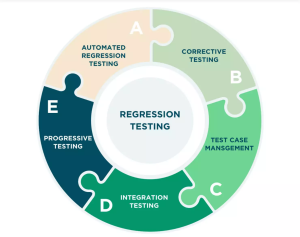
Regression Testing: Your Software’s Safety Check
Regression testing is designed to verify that existing features continue to function correctly after modifications. These modifications can include:
The goal isn’t simply to find new defects. It’s to make sure yesterday’s working software doesn’t become tomorrow’s problem. A strong regression testing strategy repeatedly validates critical functionality throughout the application’s lifecycle.
Why Regression Testing Services Matter
You might be thinking, “Can’t our development team handle regression testing?” They can—and in some situations, they do. But as applications become larger and release cycles become faster, maintaining comprehensive regression coverage becomes increasingly challenging. This is where specialized Regression Testing Services can add significant value. An experienced testing team can help organizations develop structured regression strategies, identify high-risk areas, automate repetitive test scenarios, and continuously validate critical workflows. Instead of testing randomly, teams can prioritize what matters most.
For example, an e-commerce company may prioritize:
Login → Product Search → Cart → Checkout → Payment → Order Confirmation
A CRM platform might focus on:
Customer Data → Leads → Opportunities → Workflows → Reports → Integrations
The approach changes according to the application, but the objective remains the same- Protect the functionality your customers depend on.
Manual & Automated Testing: A Smarter Combination
Regression testing doesn’t have to mean manually repeating thousands of test cases after every release. That approach can be slow, expensive, and difficult to scale. Automation can take over repetitive and frequently executed scenarios, allowing testing teams to run large regression suites faster and more consistently. But automation isn’t the entire answer. Manual testing remains valuable for exploratory testing, usability scenarios, complex workflows, and situations requiring human judgment. The smarter strategy is often a combination of both.
Automate what should be automated. Test manually where human insight matters. This balance can improve testing efficiency without sacrificing quality.
Regression Testing in the Age of Continuous Releases
Software development isn’t slowing down. Agile methodologies, DevOps practices, CI/CD pipelines, cloud platforms, APIs, and AI-driven applications are pushing organizations toward faster release cycles. But speed creates a challenge. The faster you release, the less time you may have to manually validate everything.
That’s why regression testing needs to become part of the development and delivery process—not an afterthought before production.

What Makes an Effective Regression Testing Strategy?
A successful regression testing approach isn’t simply about having a large number of test cases. It’s about testing the right things at the right time. Here are a few important considerations:
Not every feature carries the same business risk. Focus first on functions that directly affect revenue, customers, security, or core operations.
Organize tests according to risk and importance. Critical tests should be executed consistently whenever relevant changes occur.
Automate repetitive regression scenarios to reduce execution time and increase test coverage.
Modern applications rarely operate independently. Validate APIs, databases, payment gateways, third-party applications, and connected systems.
Regression testing should happen continuously rather than only before major releases.
A failed test is a signal. Teams should investigate the underlying cause, determine business impact, and prevent similar issues from recurring.
Here’s the Question: How Much Is One Bug Worth? There’s no universal price tag for a software bug. A minor cosmetic issue may have little financial impact. A broken payment workflow could cost thousands—or potentially millions—depending on the application and scale.
But here’s the bigger point: You don’t always know the price of a bug until it’s too late. That’s why proactive testing matters. Regression testing helps organizations discover potential problems while they are still inside a controlled testing environment—before customers discover them in production.
Don’t Let Your Next Update Become Your Next Incident
Software needs to evolve. Businesses need new features. Customers expect improvements. Security vulnerabilities need to be addressed. Technologies change. Stopping change isn’t the answer. Managing change intelligently is.
Regression Testing Services give organizations a structured way to protect existing functionality while continuing to innovate. By combining risk-based testing, automation, manual validation, integration testing, and continuous execution, businesses can reduce the chances of costly surprises after deployment.
Because the real goal of testing isn’t simply to say: “We found the bugs.” It’s to confidently say: “We made the change—and everything that mattered still works.”

Ready to Put a Price Tag on Prevention?
Every software release carries some level of risk. The real question is: Are you identifying that risk before your customers do? What would one undetected bug cost your business?
Instead of waiting for a production issue to reveal the answer, take a proactive approach with BriskWinIT Solutions’ Regression Testing Services. From validating critical workflows to identifying defects introduced by new updates, our testing expertise helps businesses improve software quality, minimize release risks, and deliver more reliable digital experiences.
Frequently Asked Questions
Regression Testing Services involve testing existing software functionality after changes, updates, bug fixes, or new feature implementations. The goal is to ensure that recent modifications haven’t negatively affected features that were already working correctly.
Even a small software change can unintentionally break an existing feature. Regression testing helps identify these issues before they reach customers, reducing the risk of production failures, customer dissatisfaction, revenue loss, and costly rework.
Regression testing should be performed whenever significant changes are made to an application, including new feature releases, bug fixes, system upgrades, database changes, API modifications, and third-party integrations. It can also be integrated into CI/CD pipelines for continuous validation.
Yes. Many repetitive and frequently executed regression test cases can be automated. Automation helps teams execute large test suites faster and more consistently while reducing manual testing effort. Manual testing can still complement automation for exploratory and complex scenarios.
Finding a defect during development or testing is generally less disruptive than discovering it after deployment. Regression testing helps identify defects earlier, reducing rework, emergency fixes, support costs, and potential customer-impacting incidents.
Almost any application that undergoes regular changes can benefit from regression testing, including CRM systems, e-commerce platforms, web and mobile applications, enterprise software, cloud applications, APIs, and integrated business systems.
BriskWinIT Solutions provides Regression Testing Services designed to help businesses validate existing functionality after software changes. Our approach can combine manual and automated testing, risk-based test prioritization, integration testing, and continuous validation to help organizations deliver stable and reliable releases.
With a structured approach to software testing, BriskWinIT Solutions helps businesses identify regression risks, validate critical application functionality, and improve release confidence. By combining appropriate testing methodologies and automation where applicable, businesses can focus on innovation without compromising software quality.
Let’s Talk
Think about it—is your current regression testing strategy strong enough to protect your business from costly surprises?
Have you ever experienced a production bug caused by a seemingly harmless update? Share your experience and perspective with us—and let BriskWinIT Solutions help you make your next release more confident, stable, and customer-ready.
 contactus@briskwinit.com