

Imagine a sales team that knows which customer is most likely to buy next, while a customer service team can see the complete customer journey before responding to a question. A CRM can now go far beyond storing contact details, recording calls, and displaying dashboards. With AI, it can understand patterns, recommend relevant actions, automate routine tasks, and help employees make faster, more informed decisions. That is where AI-powered custom CRM is changing the conversation.
Traditional CRM systems have already transformed how businesses manage customer relationships. But many organizations still use their CRM primarily as a place to store information. Customer data goes in, reports come out, and employees spend considerable time deciding what to do next.
AI can change that. When artificial intelligence is combined with Custom CRM Development Services, a CRM can become an intelligent business engine—connecting sales, marketing, customer service, automation, and customer insights in a way that is designed around the organization’s specific processes.
But can AI really make custom CRM the ultimate sales and customer experience engine? The answer is: potentially, yes—but only when AI is built around meaningful business needs.
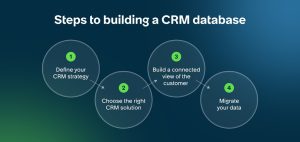
From CRM Database to Intelligent Business Partner
A conventional CRM answers questions such as:
An AI-enabled custom CRM can go further:
This move is significant. Instead of simply presenting information, an intelligent CRM can help employees interpret that information and act on it. For example, a sales representative might open their dashboard in the morning and see that several high-value prospects have recently interacted with emails, visited important pages, or requested product information.
Rather than expecting the salesperson to manually analyse every interaction, the CRM could prioritize those accounts and recommend appropriate follow-up actions.
The CRM doesn’t replace the salesperson. It helps the salesperson focus.
Personalized Customer Experiences at Scale
Customers increasingly expect businesses to understand their needs. They don’t want to repeatedly explain their history to different departments. They don’t want irrelevant offers. And they don’t want to wait unnecessarily for simple answers. This is where AI-powered CRM can make a major difference.
A custom CRM can bring together information from multiple customer touchpoints, including sales conversations, service requests, purchase history, website interactions, marketing engagement, and other business systems. AI can then help identify patterns within that information.
For example, if a customer frequently purchases a particular service and recently contacts support about a related issue, the CRM could help the service representative understand the context and suggest relevant next steps. The result can be a more connected customer experience. Instead of treating every interaction as a separate event, the business begins to see the customer journey as one continuous relationship.

AI Can Help Sales Teams Know What to Do Next
One of the biggest opportunities for AI in CRM is sales productivity. Sales professionals already have access to enormous amounts of information. The challenge isn’t always finding data. The challenge is knowing what matters.
AI can help prioritize leads, identify patterns, summarize customer conversations, highlight changes in buying behaviour, and recommend follow-up actions. Consider a sales pipeline containing hundreds of opportunities. A standard CRM may show every opportunity according to predefined filters.
An AI-enabled system could potentially identify which opportunities deserve immediate attention based on factors such as recent engagement, historical patterns, deal activity, customer behaviour, and other relevant signals. This can help sales teams spend less time searching through records and more time having meaningful conversations.
Smarter Customer Service
Customer experience doesn’t end when a sale is completed. In many industries, the real relationship begins afterward. AI can help customer service teams deliver faster and more contextual support. Imagine a customer submitting a support request. Instead of an agent manually searching through multiple systems, an intelligent CRM could bring together the customer’s relevant history, previous interactions, open cases, products or services involved, and potential solutions. AI could also summarize lengthy conversations or suggest responses for the service representative to review. This doesn’t mean every customer interaction should be handled by AI. Human involvement remains important, especially when situations are complex, sensitive, or require judgment. The real value is giving employees better information at the right moment.
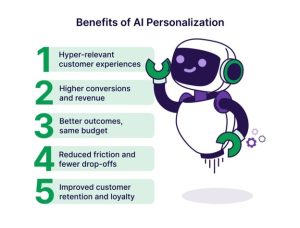
Customization Makes AI More Useful
This is where custom CRM development becomes particularly interesting. Every business has different processes.
A generic CRM cannot always accommodate every unique process naturally. A custom CRM can be designed around the organization’s actual workflows. AI can then be integrated into those workflows.
For example, instead of simply adding a generic AI chatbot to a CRM, an organization could develop intelligent capabilities specifically for lead qualification, customer retention, service prioritization, account management, or internal knowledge discovery. The goal isn’t to add AI because it is fashionable. The goal is to use AI where it creates measurable value.

Automation: Let the CRM Handle the Repetitive Work
Sales and customer service teams often spend significant time on repetitive administrative activities.
AI combined with workflow automation can reduce some of this manual effort. A customer interaction could automatically trigger a series of predefined actions. An AI system could summarize the conversation, update relevant information, recommend the next step, and notify the appropriate team member. Employees can then spend more time on activities requiring communication, creativity, negotiation, and human judgment. That’s an important distinction. The objective isn’t to automate people. It’s to automate unnecessary work around people.
Predictive Insights Can Change the Sales Game
Historical CRM data can contain valuable signals.
AI can analyse large volumes of historical and real-time information to identify patterns that might be difficult to recognize manually. This can support predictive use cases such as lead scoring, churn-risk identification, sales forecasting, and customer segmentation. For sales leaders, this can provide another layer of insight when making decisions.
Instead of asking only, “What happened?” They can begin asking: “What is likely to happen next?” And perhaps more importantly: “What should we do about it?”
The CRM Could Become a Shared Intelligence Layer
One of the most powerful possibilities is connecting AI-powered CRM with the wider business ecosystem.
A custom CRM can potentially integrate these systems and create a more connected view of customer information. AI can then help employees discover relationships across that information.
The CRM becomes more than a sales tool. It becomes a shared intelligence layer across the customer journey.
But AI Alone Won’t Create a Great CRM
There is an important reality business should remember. Adding AI to a poorly designed CRM will not automatically create a great customer experience. If customer data is inaccurate, AI can produce unreliable insights.
Successful AI-powered CRM therefore requires more than technology. It requires clean data, thoughtful workflows, strong integration, user adoption, security, governance, and a clear understanding of business objectives.
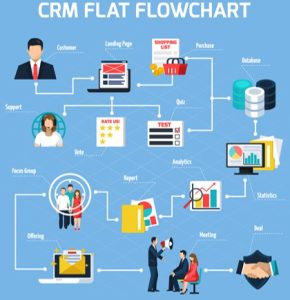
The Future: CRM That Doesn’t Just Record the Journey—It Helps Shape It
The future of CRM may not be about dashboards becoming more complicated. It may be about systems becoming more helpful. A truly intelligent custom CRM could understand customer context, identify important signals, recommend relevant actions, automate repetitive processes, and help employees make faster and more informed decisions.
So, can AI make custom CRM the ultimate sales and customer experience engine?
AI can certainly move CRM much closer to that vision.
But the winning combination isn’t simply AI and CRM. It is the right data, thoughtful customization, intelligent AI, meaningful automation and human expertise.
This is where choosing the right Custom CRM Development Services provider
can make a difference. BriskWinIT Solutions can help businesses explore and develop CRM solutions that align with their unique workflows, customer engagement strategies, and technology goals. By combining custom CRM development with AI, automation, and integration capabilities, businesses can build systems designed around how their teams actually work.
That’s what can transform a CRM from a system employees are required to use into a system they actually want to use. The question for businesses is no longer simply, “Do we need a CRM?” A more interesting question is: “What could our sales and customer experience teams accomplish if our CRM could think, learn, and assist alongside them?”
That may be the real beginning of the next generation of customer relationship management—and BriskWinIT Solutions can be a technology partner for businesses ready to explore that future.
 contactus@briskwinit.com