

Every customer interaction leaves something behind. A sales call creates a record. An email becomes part of a communication history. A support request adds another chapter. A purchase changes the customer’s profile. Over time, thousands of these small interactions come together inside a Customer Relationship Management (CRM) system and create a bigger picture of the customer. But here is the interesting part: What if the story your CRM tells isn’t the story that actually happened?
A duplicated customer record, a failed integration, an incorrect field mapping, or a broken workflow can quietly change the narrative. The CRM may still look functional, but the information behind the screens may no longer be reliable. This is where CRM software testing becomes more than a technical exercise. It becomes a way to protect the accuracy, consistency, and usability of the customer story.

Every Customer Record Is Part of a Bigger Story
Think about a customer who has interacted with a business several times. They first visit the website, submit an inquiry, speak with a salesperson, receive a proposal, make a purchase, and later contact support. Ideally, the CRM connects all these moments. The sales team can see what happened before. The support team understands the customer’s history. Marketing can identify relevant opportunities. Management can use reliable information for reporting and planning. But what happens if one of those connections fails?
The inquiry might not reach the sales representative. The purchase could be attached to the wrong account. A support interaction might create a duplicate record. Suddenly, different teams are looking at different versions of the same customer.
The CRM hasn’t necessarily stopped working. The story has simply become inaccurate.
Testing Looks Beneath the Surface
CRM software testing services help organizations examine whether the system is actually behaving as expected. Testing can cover everything from individual features to complete customer journeys. Instead of checking only whether a button works, testers can look at the bigger picture—whether the CRM produces the right result as real business processes move through the system. That distinction matters.
A CRM may successfully save a customer record while still assigning the wrong account owner. A sales workflow may trigger successfully but send incorrect information to another system. A dashboard may load correctly while displaying incomplete data.
Functional testing helps verify that individual features perform according to requirements. But CRM quality often depends on how those features work together.

The Data Has to Travel Correctly
Modern CRM platforms rarely operate alone. They may connect with websites, email platforms, ERP systems, payment applications, marketing automation tools, customer portals, analytics platforms, and other business applications. Each connection creates another opportunity for something to go wrong.
Imagine a customer’s phone number being entered in one system and transferred into the CRM. If the field mapping is incorrect, the data might land in the wrong place—or fail to transfer altogether. Integration testing helps examine these connections.
It asks whether data moves between systems correctly, whether required fields are transferred, whether formats remain consistent, and whether errors are handled appropriately. Because when systems communicate, accuracy has to survive the journey.
What About Duplicate and Incomplete Data?
A CRM filled with duplicate or incomplete records can quickly become difficult to trust. Two records may represent the same customer. One may contain an updated phone number while another contains an older email address. A sales representative may unknowingly contact the wrong record. Reports may count the same customer multiple times. Data validation and data-quality testing can help identify these issues. Testing teams can examine scenarios such as:
The objective isn’t simply to find technical defects. It is to help ensure that the information people depend on remains meaningful.

The Customer Journey Needs Testing Too
A CRM can pass individual functional tests and still struggle with a complete customer journey. Consider a simple journey:
A customer submits a form, the CRM creates a lead, the lead is assigned to a salesperson, the salesperson updates the opportunity, a quotation is generated, the customer becomes an account, and the support team takes over after the purchase.
Each individual step may work. But what happens when they are connected? Does the correct salesperson receive the lead? Does converting the lead preserve the necessary data?
End-to-end testing looks at these connected processes. It helps businesses understand whether the CRM works as a complete ecosystem rather than a collection of isolated features.
Regression Testing: Protecting Yesterday’s Story from Today’s Update
CRM platforms evolve constantly. Organizations add new features, modify workflows, update integrations, customize dashboards, and introduce new automation. Every change can potentially affect something that was already working. This is where regression testing becomes important.
Suppose a business changes its lead-assignment workflow. The new functionality works perfectly. But the change unintentionally affects an existing sales report. Or perhaps a CRM update improves one integration while disrupting another. Regression testing helps verify that existing functionality continues to work after changes are introduced.
In simple terms, it asks: “What else changed when we changed this?” That question can prevent small updates from creating larger operational problems.
Usability Is Part of the Story
Technical accuracy isn’t the whole picture. A CRM exists for people to use. If users struggle to find customer information, understand workflows, enter data, or complete routine tasks, the system can become difficult to use even when the underlying technology is functioning correctly. Usability testing can examine how easily employees navigate the CRM and complete real-world activities.
For example:
These experiences matter because a CRM’s value depends partly on whether people can use it effectively.
Performance Matters When the Story Gets Bigger
A CRM that performs well with a small amount of data may behave differently as usage increases.
Performance testing helps organizations understand how the system behaves under expected and demanding conditions. Slow searches, delayed transactions, or overloaded processes can affect productivity and user experience. The motto isn’t simply to make a CRM “fast.” It is to understand whether the system can continue supporting business processes as demand changes.
Security Protects the Story
Customer data is valuable—and sensitive. CRM testing should therefore also consider security. Testing can help examine whether users can access only the information appropriate to their roles, whether sensitive data is adequately protected, and whether unauthorized actions are prevented. Role-based access, authentication, authorization, session handling, and data protection can all form part of a broader CRM testing strategy.
Because an accurate customer story isn’t useful if it is available to people who shouldn’t see it.
Automation Can Make Testing More Consistent
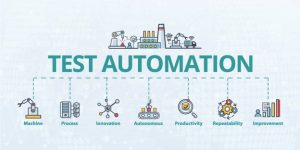
CRM environments can involve hundreds or thousands of repetitive scenarios. Running every test manually after every change may take considerable time. Test automation can help organizations repeatedly execute selected test cases, particularly for regression testing and frequently used workflows. Automation doesn’t eliminate the need for human testers. Instead, it can take care of repeatable checks while testing professionals focus more attention on complex scenarios, unusual user behaviour, integrations, and business-critical workflows.
The result can be a more repeatable and scalable quality process.
Testing Should Follow the Business, Not Just the Software
One of the most useful ways to approach CRM testing is to begin with business processes. Don’t start only with screens and buttons. Start with questions such as:
These questions help connect testing with the way the organization actually operates. After all, a CRM isn’t implemented simply to create screens. It is implemented to support relationships, processes, decisions, and customer experiences.
When the Data Tells the Right Story
A reliable CRM doesn’t simply store information. It connects information in ways that help people understand what happened, what is happening, and what may need attention next. Testing helps protect that connection. It checks whether data is captured correctly, transferred accurately, displayed appropriately, protected securely, and maintained through system changes.
And perhaps most importantly, it helps organizations discover problems before those problems become part of everyday business operations.
The Bigger Picture
Every CRM contains thousands of small stories.
When those stories are supported by accurate and dependable data, teams have a stronger foundation for their everyday work. When the data is incomplete, duplicated, misplaced, or inconsistent, the story becomes harder to understand.
That is why CRM software testing should not be viewed only as a final checkpoint before launch. It can be part of an ongoing quality strategy that follows the CRM through implementation, customization, integration, upgrades, and continuous improvement.
Every CRM tells a story.
The real question is whether your system is telling the story your business can confidently act on.
If you’re exploring ways to improve CRM reliability, testing strategy, data quality, or user experience, take a closer look at how each part of your CRM connects with the next. BriskWinIT Solutions provides CRM software testing services designed to help businesses validate functionality, integrations, data accuracy, performance, and user experience. With the right testing approach, it’s not just about finding what is broken—it’s about making sure the entire customer journey works smoothly from beginning to end.
Frequently Asked Questions
CRM software testing helps verify that customer data, workflows, integrations, reports, and key features work as expected. It can also identify issues before they affect users or business operations.
Testing can identify issues such as duplicate records, missing information, incorrect field mapping, invalid data, and synchronization problems between connected systems.
Yes. CRM platforms are frequently updated with new features, customizations, integrations, and workflow changes. Regression testing helps verify that existing functionality continues to work after these changes.
CRM testing can evaluate how easily users navigate the system, access customer information, complete workflows, and use important features. Identifying usability issues can help create a smoother user experience.
Integration testing verifies that data moves correctly between the CRM and connected applications such as ERP platforms, marketing tools, websites, payment systems, and customer portals.
BriskWinIT Solutions provides CRM software testing services that can help businesses evaluate functionality, integrations, data quality, performance, security, and usability across their CRM environment.
Your CRM Has a Story—What Does Yours Say?
Every lead, customer interaction, update, and support request adds another line to your CRM’s story. But does every piece of data connect the way it should? Take a closer look at your CRM journey—from the first customer interaction to post-purchase support—and discover where testing can help turn scattered information into a reliable customer story.
 contactus@briskwinit.com