

In this data-driven business landscape, customer information is no longer simple or limited to names and contact numbers. Large enterprises deal with millions of customer records, multiple communication channels, purchase histories, service interactions, contracts, and compliance requirements. Managing such vast and complex datasets is not just a technological challenge—it is a strategic necessity.
This is where the power of the Siebel CRM system becomes evident. Designed for enterprise-level organizations, this robust customer relationship management platform helps companies organize, analyse, and manage enormous volumes of customer data with precision and efficiency.
But how exactly does it handle complex customer data at such a scale? Let’s explore how large organizations rely on the Siebel CRM system to bring structure, clarity, and value to their customer information.
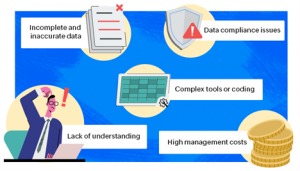
Understanding the Challenge of Complex Customer Data
Before diving into the solution, it’s important to understand the problem.
Large organizations—especially in industries like telecommunications, banking, healthcare, utilities, and government services—manage customer data across multiple departments and systems. Each interaction generates new information:
Without a centralized system, this data often becomes fragmented across different platforms. Marketing teams may have one version of customer data, customer service teams another, and sales teams yet another.
The outcome is, inconsistent records, inefficient processes, and a fragmented customer experience. A powerful enterprise CRM platform like the Siebel CRM system helps eliminate these silos by creating a unified and intelligent data environment.
Creating a Single Source of Truth
One of the most important strengths of the Siebel CRM system is its ability to create a single, unified view of the customer. Instead of storing customer information in scattered databases, the system consolidates everything into a centralized platform. Every department—from sales and marketing to support and operations—can access the same customer profile. This unified profile typically includes:
This centralized structure ensures that everyone in the organization is working with accurate and consistent information.
Imagine a customer calling support after speaking with a sales representative earlier in the day. With a unified CRM platform, the support team can instantly see the entire interaction history and respond accordingly—without asking the customer to repeat information.
Handling Massive Data Volumes with Enterprise Scalability
Large enterprises often manage millions of customer records and transactions every day. Handling such enormous volumes of data requires a system built for scale. The Siebel CRM system is designed specifically for high-performance enterprise environments. Its architecture supports:
This scalability allows organizations to grow their operations without worrying about CRM performance limitations. Whether it’s a telecom provider managing millions of subscribers or a global bank handling thousands of daily transactions, the system maintains reliable performance even under heavy workloads.
Managing Complex Customer Relationships
Not every customer relationship is straightforward. In enterprise environments, customer structures can be extremely complex. For example, a large corporate client may include:
The Siebel CRM system allows organizations to model these relationships through hierarchical account structures. This means businesses can track:
By mapping these relationships, organizations gain a deeper understanding of their customer ecosystems and can manage accounts more effectively.
Intelligent Data Organization and Segmentation
Another challenge large organizations face is making sense of massive customer datasets. Having millions of records is useful only if the information can be organized and analysed effectively. The Siebel CRM system helps businesses structure their customer data through powerful segmentation capabilities. Companies can group customers based on criteria such as:
This structured segmentation enables organizations to run targeted marketing campaigns, design personalized services, and identify high-value customers more easily. Instead of treating all customers the same, businesses can modify their strategies based on real data insights.
Supporting Complex Business Processes
Large organizations often operate with highly customized workflows and regulatory requirements. CRM systems must adapt to these processes rather than forcing companies to change their operations. One of the defining strengths of the Siebel CRM system is its extensive configurability and customization capabilities. Enterprises can configure the system to support:
For example, in the telecommunications sector, a customer request might involve multiple steps—from order entry and provisioning to billing activation. The CRM system can automate and track each stage of the process. This automation ensures that complex operations remain organized and consistent.
Improving Customer Service with Complete Interaction History
Customer experience depends heavily on how well organizations understand previous interactions. When customer data is fragmented across systems, service representatives struggle to provide efficient support. They may lack context about earlier conversations or service issues. The Siebel CRM system solves this problem by recording every interaction within the customer profile. This includes:
By viewing this complete interaction history, support agents can respond more quickly and accurately. Customers benefit from faster resolutions, while organizations gain higher satisfaction and loyalty levels.
Enhancing Data Quality and Governance
Managing complex customer data also requires strict data governance and quality control. Large enterprises must ensure that their data remains:
The Siebel CRM system includes robust mechanisms for maintaining data quality.
These include:
For industries with strict compliance requirements—such as banking or healthcare—these governance features are critical. They help organizations maintain reliable customer records while protecting sensitive information.
Enabling Cross-Department Collaboration
Customer data is valuable only when it can be shared effectively across the organization. Sales teams need insights from marketing campaigns. Customer support teams need access to purchase history. Operations teams require visibility into service requests. The centralized architecture of the Siebel CRM system allows different departments to collaborate seamlessly. Instead of working with isolated datasets, teams can access a shared information environment that promotes coordination and efficiency. This collaboration leads to:
Advanced Analytics for Better Decision-Making
Data becomes truly powerful when organizations can transform it into actionable insights. The Siebel CRM system supports advanced analytics and reporting tools that allow businesses to analyse customer behaviour, trends, and performance metrics. Organizations can generate insights such as:
These insights help decision-makers develop smarter strategies and improve business outcomes. Instead of relying on assumptions, leaders can make decisions based on reliable data.
Integrating with Enterprise Systems
In large organizations, CRM systems rarely operate in isolation. They must integrate with other enterprise platforms such as:
The Siebel CRM system offers strong integration capabilities that allow it to connect seamlessly with other business applications. This integrated ecosystem ensures that customer data flows smoothly between systems, eliminating duplication and improving operational efficiency.
Preparing Organizations for the Future
Customer expectations continue to evolve rapidly. Businesses must adapt by delivering personalized, data-driven experiences across multiple channels.
Managing this level of complexity requires a CRM platform capable of handling large-scale data environments while remaining flexible enough to support future innovation. For many enterprises, the Siebel CRM system continues to serve as a reliable backbone for customer data management. Its ability to organize vast datasets, support complex relationships, and enable cross-department collaboration makes it a powerful tool for modern organizations.
Final Thoughts
In large organizations, customer data is not just a collection of records—it is a strategic asset. When managed effectively, it drives better customer experiences, smarter decisions, and stronger business growth. However, without the right systems in place, complex customer data can quickly become overwhelming.
By centralizing information, maintaining data quality, supporting advanced analytics, and enabling seamless collaboration, the Siebel CRM system empowers enterprises to transform complex customer data into meaningful business value.
To fully unlock these capabilities, many organizations partner with experienced service providers like BriskWinIT Solutions, a trusted provider of Siebel CRM consulting, implementation, customization, and support services. With deep expertise in enterprise CRM environments, BriskWinIT Solutions helps businesses optimize their Siebel CRM platforms, streamline workflows, and ensure that complex customer data is managed efficiently and securely’
Let’s Connect
As businesses continue to scale and evolve, one question becomes increasingly important: Is your organization truly unlocking the full potential of the customer data it already has?
If this topic resonates with your business challenges or experiences, we invite you to explore more insights on our blog. Share your thoughts, perspectives, or real-world experiences with managing enterprise customer data—we’d love to hear from you. Your ideas and discussions help create a stronger community of professionals learning from each other.
 contactus@briskwinit.com