

Imagine your team has just launched an exciting new feature. The application runs smoothly, the update looks promising, and everyone is ready to celebrate. Suddenly, a customer reports that an existing payment function has stopped working. Another discovers missing information, while a third struggles with a workflow that worked perfectly before the update.
What went wrong? A new change unintentionally affected existing functionality. This is why regression testing remains a critical part of software quality assurance. It helps teams verify that previously working features continue to function after code changes, bug fixes, integrations, or new releases.
However, artificial intelligence (AI) is changing how software is developed and tested. AI-powered tools can generate code, suggest test cases, analyse failures, and accelerate automation. At the same time, frequent updates, complex integrations, and unpredictable AI-generated outputs introduce new testing challenges.
The focus should not be on increasing the number of tests but on identifying potential risks, validating essential functionality, and ensuring software reliability with every release. Let’s explore ten best practices every team should follow to make regression testing more effective in the AI era.

10 Best Practices for Regression Testing in the AI Era
Running every test after every minor change can consume time and resources. However, testing too little may allow critical defects to reach production. Risk-based regression testing helps teams prioritize functionality according to its business importance and possibility of failure.
For example, payment processing, user authentication, customer records, and essential business workflows deserve more attention than minor visual changes. AI-assisted tools can analyse code changes, previous defects, and application dependencies to suggest high-risk areas. Testers should validate these recommendations before deciding which tests to execute.
So, maintain a prioritized list of critical features and run the most important regression tests whenever relevant changes occur.
A large test suite does not automatically mean better testing. Outdated test cases, duplicated scripts, and unnecessary checks can slow execution without improving coverage. Review your test suite regularly. Remove redundant cases, update tests when requirements change, and ensure that essential business workflows are covered.
For instance, an e-commerce application should test the complete purchasing journey, from adding products to the cart to completing payment and viewing order confirmation.
Ask yourself, if your team introduced a defect into a critical workflow today, would your existing tests detect it?
If the answer is uncertain, focus on improving test coverage before adding more automated scripts.
AI can help testers analyse requirements, examine code changes, and generate possible test scenarios faster. Suppose a developer modifies a customer address field. An AI-assisted tool might recommend checking address validation, delivery calculations, saved customer details, and shipping integrations.
These suggestions can help uncover dependencies that might otherwise be overlooked. However, AI-generated tests are not always accurate. They may misunderstand business rules, overlook edge cases, or create unnecessary test cases. Treat AI as a testing assistant rather than an independent decision-maker. Review every important recommendation against actual requirements and expected application behaviour.
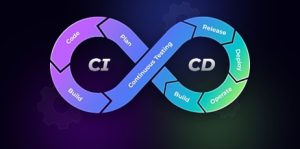
Why wait until the end of a development cycle to discover that a new update has broken an existing feature? Integrating regression tests into continuous integration and continuous delivery (CI/CD) pipelines helps teams identify defects earlier.
A practical approach is to execute smoke tests after code commits, targeted regression tests during build validation, and broader test suites before major releases. AI can also help prioritize tests based on code changes and historical failures. Early feedback allows developers to investigate problems while the changes are still fresh in their minds.
Traditional applications often produce predictable outputs, making exact comparisons useful. AI-powered applications, however, may generate different responses to similar inputs while still providing acceptable results.
Consider a customer-support chatbot. Its wording may vary between conversations, but its answers should remain relevant, accurate, and consistent with business policies. Testing should therefore evaluate criteria such as factual accuracy, relevance, completeness, safety, and compliance with defined requirements.
For retrieval-augmented generation (RAG) applications, teams should also verify whether the system retrieves relevant information and generates answers supported by those sources. Maintain a representative evaluation dataset containing common questions, edge cases, and previously identified failures. Reuse it whenever models, prompts, or retrieval configurations change.
Even well-designed tests can miss defects when their data does not reflect real-world conditions. Regression testing should include valid inputs, invalid values, boundary conditions, incomplete records, and unusual user behaviour. AI-powered systems may also require examples covering different languages, writing styles, and ambiguous requests.
For example, a chatbot should be tested against both straightforward questions and confusing or out-of-scope requests. Test data must also be handled responsibly. Sensitive customer information should be protected through appropriate masking, anonymization, or synthetic data.
Review test datasets regularly to ensure they remain relevant, diverse, accurate, and secure.

Identify and Fix Flaky Tests
A test that passes one day and fails the next without any meaningful application change can undermine confidence in automation. Flaky tests may result from timing issues, unstable environments, shared test data, external dependencies, or inconsistent application responses. AI-based systems can introduce additional variation because generated outputs may not always be identical. Teams can improve reliability by isolating tests, using stable environments, replacing arbitrary delays with condition-based waits, and defining appropriate acceptance criteria for variable outputs.
Retries may help investigate intermittent failures, but they should not conceal genuine defects. Track flaky tests separately and investigate recurring failures instead of repeatedly rerunning them without understanding the cause.
Automation can execute repetitive checks quickly and consistently. Human testers bring contextual understanding, creativity, and the ability to recognize unexpected user experiences. Both are essential for effective regression testing.
An automated test might confirm that a chatbot responds successfully and does not reveal restricted information. A human reviewer can assess whether its answer is understandable, relevant, and genuinely useful. Similarly, automated interface checks can validate navigation, while exploratory testing can uncover confusing workflows that predefined scripts miss.
Automate repeatable checks and use human judgment for complex scenarios, new features, ambiguous requirements, and AI-generated results that require interpretation.
Modern applications rely on APIs, databases, third-party platforms, libraries, and external services. A seemingly minor update to one component can affect several connected workflows. AI applications introduce additional dependencies, including model versions, prompts, embedding models, retrieval settings, and knowledge bases.
For example, an AI assistant may begin providing outdated information after a knowledge-based update, even when its interface remains unchanged. Teams should identify important dependencies and determine which regression tests must run when those components change. Maintain version records for important software, models, prompts, and configurations. This helps teams reproduce failures and understand differences between releases.
Regression testing should evolve alongside the application. Counting automated tests alone does not reveal whether a testing strategy is effective. Track meaningful indicators such as defect escape rate, production incidents, test pass rates, flaky-test frequency, execution time, and coverage of critical workflows.
For AI-powered systems, additional measures may include factual accuracy, task completion, retrieval quality, and compliance with defined policies. AI-assisted analytics can help identify recurring failures, but metrics must be interpreted in context. For example, a high pass rate offers limited assurance if essential customer workflows are missing from the test suite.
Review results after major releases, investigate recurring defects, and use those findings to improve test coverage and automation priorities.

Conclusion: Build Confidence with Every Release
In the AI era, software development is becoming faster, but speed alone cannot guarantee reliability. Every code update, new feature, integration, and model adjustment can affect functionality that users already depend on. A well-planned regression testing strategy helps teams identify these risks before they disrupt business operations. By prioritizing critical scenarios, maintaining dependable test suites, integrating automation, evaluating AI behaviour, and continuously improving testing practices, organizations can protect software quality while supporting faster delivery.
BriskWinIT Solutions recognizes the importance of reliable software and effective testing practices in modern IT environments. A thoughtful approach to regression testing can help teams strengthen application stability, improve release confidence, and deliver better user experiences.
Let’s start a conversation!
Which regression testing challenge takes the most time in your team: maintaining test scripts, managing flaky tests, improving coverage, or validating AI-generated outputs? Explore these best practices, compare them with your current approach, and share your thoughts and perspectives. Your experience could help other teams discover smarter ways to improve software quality.
 contactus@briskwinit.com